
Earn University Credit With Expanish
Expanish is proud to offer official academic credit from an accredited university in the United States. All students studying at our school can choose to receive a U.S.-based transcript for the courses they complete with us.
Expanish has a School of Record relationship with the IPSL Global Institute at Westminster University. IPSL, the founder of Service-Learning, is a global education institute within Westminster University, which is accredited by the Northwest Commission on Colleges and Universities.
In addition to the rigorous reviews conducted by the International Association of Language Centres (IALC), our School of Record reviews every Expanish course, general academic practices, physical facilities, policies and standards. With their approval, after process of observation and evaluation, the courses at Expanish receive a course equivalency based on similar courses offered at universities in the United States. Our courses are therefore validated for United States Higher Education credit by our School of Record.
IPSL faculty and/or staff regularly perform site audits and curriculum review, thereby providing the requisite external oversight for our language programs. By conducting periodic reviews and creating site audit reports, this helps us reach our goals for academic and student support excellence.
Barcelona, Spain Courses
This course is an immersive exploration of the diverse factors influencing consumer choices, preferences, and behaviors. It offers a comprehensive understanding of the psychological, social, cultural, and economic factors that shape consumer decisions, and then uses real-world examples in Spain, one of Europe's most dynamic markets. The course begins by establishing the foundational theories and frameworks in consumer behavior. Students will learn about the psychological aspects underlying consumer choices, including perception, motivation, learning, attitude formation, and decision-making processes. Building upon this foundation, the focus will shift towards examining how these theories manifest with case studies, including within the unique context of Spain. Key topics covered in this course include cultural influences on consumer behavior, marketing strategies and consumer engagement, consumer trends and market dynamics, retail and consumer experience, and ethical consumption and sustainability.
ENTREPRENEURSHIP & INNOVATION IN EUROPE 🔗
This course provides students with an in-depth understanding of the entrepreneurial and innovation ecosystem in Europe, with Barcelona as a focal point for experiential learning. Students will analyze how European institutions, cultures, and policies influence entrepreneurship and innovation, and they will examine how start-ups and established firms across Europe develop competitive advantages in a global economy. The course will cover the following themes: European Entrepreneurship Context, Policy and Ecosystem Development, Innovation Models, Sectoral Entrepreneurship, Venture Financing, and Case Studies in Barcelona and Beyond. Field visits to local start-ups, incubators (e.g., Barcelona Activa, Pier01), and innovation districts (e.g., 22@) will complement classroom learning, providing students with direct exposure to European entrepreneurial practices.
FOOD AS AN EXPRESSION OF CULTURE IN SPAIN 🔗
In this course, students will embark on a journey through the rich traditions of Spanish food and culture, with a special emphasis on the Western Mediterranean as a crossroads of civilizations. This immersive experience highlights how gastronomy reflects cultural identity, history, and health, while also revealing Spain´s global influence. The course will cover key dimensions of food and culture, including historical context, cultural heritage and identity, the Mediterranean triad, the Mediterranean diet and health, intercultural influences, sensory experience and vocabulary. Field visits to local markets, food producers, and cultural sites will complement classroom learning, offering students direct engagement with the living traditions of Spanish gastronomy.
The Global Internship Seminar serves as a point of integration regarding the students’ experiences in the Summer Internship Programs in Barcelona, Madrid, Málaga, and Buenos Aires. Although students will be placed in individual internships, they will collectively take part in the online seminar to understand expectations, set personal objectives, develop cultural competences, identify and strengthen specific skills, critically reflect on their progress, share experiences, and learn from one another throughout. In this seminar, which is focused on understanding the application of theory to practice, students gain real world work experience while developing intercultural agility—skills and experiences which are critically important to personal, academic and professional success.
HISTORY OF POLITICAL & SOCIAL MOVEMENTS IN SPAIN & CATALONIA 🔗
This course provides a comprehensive exploration of the history of political and social movements in Spain and Catalonia. Delving into the rich tapestry of events spanning centuries, students will gain a profound understanding of the complex forces that have shaped the political landscape and social fabric of these regions. The course begins by examining the historical context of Spain and Catalonia, tracing the roots of political and social movements from medieval times to the present day. Emphasis is placed on key milestones, such as the Reconquista, the formation of the Spanish state, and the distinct historical trajectory of Catalonia within the broader Spanish context. Students will critically analyze pivotal moments, including the Spanish Civil War, the Franco era, and the transition to democracy, exploring the profound impact of these events on political ideologies, social structures, and regional identities. Special attention is given to the unique dynamics of Catalonia, its quest for autonomy, and the evolution of its distinct political and cultural identity.
The course incorporates a multidisciplinary approach, drawing on historical, political, sociological, and cultural perspectives. Through readings, discussions, case studies, and academic site visits, students will gain insights into the motivations, ideologies, and strategies of various political and social movements, including nationalist movements, labor movements, feminist movements, and more. Themes such as regionalism, nationalism, identity politics, and the challenges of governance in diverse societies will be explored in-depth. Students will also analyze the role of literature, art, and media in shaping and reflecting political and social movements.
THE ART OF BRANDING: THE CASE OF BARCELONA 🔗
In this course, students will delve into the fascinating world of branding through the lens of one of the most iconic cities in the world—Barcelona. This immersive experience offers a unique exploration of how Barcelona strategically crafted its brand identity and global image, becoming a beacon of innovation, culture, and allure. The course will cover various aspects of branding, including Historical Context, Brand Strategy, Cultural Heritage & Identity, Urban Development & Innovation, Brand Communication & Promotion, and Managing Brand Reputation. Field trips to iconic landmarks, businesses, and cultural hubs within Barcelona will complement classroom sessions, providing tangible experiences to reinforce theoretical knowledge.
Madrid, Spain Courses
Chronicling from Madrid: Writing for Social Media 🔗
This course focuses on storytelling and reporting through social media, using Madrid as a living laboratory for digital narratives. Students will learn how to observe, document, and interpret city life while adapting their writing to the formats, audiences, and rhythms of contemporary social platforms. Through hands-on assignments, students will practice writing captions, threads, short-form stories, and multimedia narratives that combine text with images and video. The course emphasizes voice, concision, accuracy, and ethical storytelling, as well as audience engagement, platform strategies, and the impact of algorithms on visibility and reach. By the end of the course, students will have developed a portfolio of social media content and the skills to tell meaningful, place-based stories about their own experiences in Madrid that inform, engage, and resonate with local and global audiences in the digital public sphere.
The Fashion Industry in Spain: Management and Sustainability 🔗
This course offers an in-depth exploration of the Spanish fashion industry, with particular attention to global Spanish brands. Students will examine the management of certain fashion companies, from creative direction and supply chain organization to branding, retail strategies, and international expansion. In addition, students will analyze the environmental and social impact of fashion production, current sustainability challenges, and the strategies some Spanish fashion companies and sustainability agents are adopting to promote ethical sourcing, circular economy models, innovation, and transparency. By the end of the course, students will have a clear understanding of how management decisions shape the fashion industry in Spain and how sustainability is becoming a key driver of competitiveness, innovation, and long-term growth in the global fashion market.
Art and Resistance in Contemporary Madrid 🔗
This course explores the role of art as a form of resistance in contemporary Madrid, examining how artists, collectives, and cultural movements respond to social, political, and economic challenges. Through visual arts, street art, performance, music, and film, students will analyze how creative expression becomes a tool for identity formation and social change in the urban space. The course situates artistic practices within their historical and cultural context while focusing on present-day issues such as touristification, migration, gender, memory, inequality, and the use of public spaces. Students will engage with artworks, exhibitions, neighborhoods, and cultural institutions, combining critical analysis with direct observation. By the end of the course, students will have a deeper understanding of how contemporary art in Madrid reflects and shapes resistance, giving voice to marginalized perspectives and redefining the relationship between culture, power, and the city.
Madrid the Global City. Sustainability Design 🔗
This student-centered course asks participants to develop an extensive group project in response to a sustainability challenge in the city of Madrid. Using Madrid as a case study, the course first analyzes policies, design strategies, and real-world projects aimed at reducing environmental impact, improving quality of life, and promoting social equity. Topics include green spaces, sustainable transportation, social inclusivity, climate adaptation, circular economy practices, and community-driven urban initiatives. By the end of the course, students will understand how design and planning decisions may contribute to urban sustainability by designing a specific project.
FOOD AS AN EXPRESSION OF CULTURE IN SPAIN 🔗
In this course, students will embark on a journey through the rich traditions of Spanish food and culture, with a special emphasis on the Western Mediterranean as a crossroads of civilizations. This immersive experience highlights how gastronomy reflects cultural identity, history, and health, while also revealing Spain´s global influence. The course will cover key dimensions of food and culture, including historical context, cultural heritage and identity, the Mediterranean triad, the Mediterranean diet and health, intercultural influences, sensory experience and vocabulary. Field visits to local markets, food producers, and cultural sites will complement classroom learning, offering students direct engagement with the living traditions of Spanish gastronomy.
A History of LGBTQ+ Rights in Spain 🔗
This course examines the historical development of LGBTQ+ rights in Spain, exploring the social, political, and cultural forces that have shaped struggles for visibility, equality, and recognition. From periods of repression and marginalization to activism, legal reform, and international leadership in LGBTQ+ rights, students will analyze key moments and movements in contemporary Spanish history.
Topics include the Franco dictatorship, Spain’s democratic transition, grassroots activism, and landmark legal changes such as decriminalization, marriage equality, gender identity legislation, and anti-discrimination policies. The course also considers ongoing debates and challenges, including regional differences, intersectionality, generational perspectives, and the diversity of LGBTQ+ experiences across Spanish society.
Madrid’s Summer Pride (Orgullo) events provide an experiential and contemporary framework for examining the relationship between public memory, activism, culture, and human rights advocacy. By the end of the course, students will have developed a nuanced understanding of the evolution of LGBTQ+ rights in Spain and the ways in which historical memory, activism, and legal change continue to shape contemporary discussions of identity, citizenship, democracy, and human rights.
The Global Internship Seminar serves as a point of integration regarding the students’ experiences in the Summer Internship Programs in Barcelona, Madrid, Málaga, and Buenos Aires. Although students will be placed in individual internships, they will collectively take part in the online seminar to understand expectations, set personal objectives, develop cultural competences, identify and strengthen specific skills, critically reflect on their progress, share experiences, and learn from one another throughout. In this seminar, which is focused on understanding the application of theory to practice, students gain real world work experience while developing intercultural agility—skills and experiences which are critically important to personal, academic and professional success.
Málaga, Spain Courses
All Syllabi TBD
The Legacy of Al Andalus and Cultural Diplomacy |
Biotechnology and Health Management in Spain |
Business and Blue Economy in the Western Mediterranean Crossroads |
Climate Change and Coastal Engineering in the Western Mediterranean |
Luxury, Hospitality and Cuisine in Spain and Morocco |
Cybersecurity and Digital Ethics in the European Union |
San José, Costa Rica Courses
All of our San José programs are run with Universidad Latinoamericana de Ciencias y Tecnología (ULACIT) and can be found here:
Buenos Aires, Argentina Courses
CONTEMPORARY ARGENTINIAN SOCIETY 🔗
This course introduces students to Argentina’s history, culture, and society from the late 19th Century to the present. Through lectures, discussion, films, music, and short ethnographic and historical readings, students examine how Argentines have experienced immigration, Peronism, dictatorship and memory, gender struggles, religion, football, and foodways. The course centers everyday practices—family, sociability, ritual—as a way to understand national identity and social change. The course will cover various aspects of Argentina’s history, culture and life, including Argentine general Contemporary Political History, Culture & National Identity creation, and changes in the links between Race, Gender and Class in Argentina through time. Field visits to iconic landmarks, museums and cultural hubs within Buenos Aires city will complement classroom sessions, providing tangible experiences to reinforce theoretical knowledge.
Cross-cultural psychology is crucial in understanding the complex connection between culture and human behavior. Argentina has a long history linked to mental health and human rights, community psychology and innovative perspectives in law. This course will enable students to recognize how cultural norms, values and practices shape not only learning, actions, and emotions, but also the organization of institutions, care, and particularly, mental health services. The course will cover various aspects of intersections between psychology and culture such as the anthropological definition of culture as shared meaning systems, cultural models in language and thought, while also examining psychologic universalist theories and the discipline of psychology itself as a Western construct based in a specific episteme that seeks to be a universal explanation of human behavior. It will also dive into the intersection of psychology and political economy, human rights, and uses of art in mental health, among other topics.
PUBLIC HEALTH AND SOCIAL INEQUALITY IN LATIN AMERICA 🔗
This course examines the particular struggles and perspectives regarding health that emerge from the Latin American context, based on a social critique of the persistent structural inequality the region has faced. Students will be introduced to the theoretical constructs of Latin American Social Medicine and Collective health, especially the ways they challenge dominant discourses about health and the ways they have supported and fueled movements for change across the region. Students will gain both practical and analytical skills with which to approach health discourses and data in order to ask questions about the underlying structures that perpetuate unequal distributions of health-disease-care processes. The course will delve into such topics as medicalization and biopolitics, environmental justice, decolonization and gender and sexuality in order to understand the impact of colonial legacies and right-wing politics on the health of different Latin American populations, as well as the longstanding traditions of creative resistance that are firmly rooted in the region.
This course examines the history, development, and contemporary challenges of human rights in Argentina. Students will explore the social, political, and legal dimensions of human rights, with a focus on the legacies of dictatorship, transitional justice, memory, and accountability. The course situates Argentina’s experience within broader regional and global contexts, highlighting the intersections of human rights with gender, race, indigenous rights, and socio-economic inequality. Through lectures, discussion, readings, and case studies, students will analyze key human rights movements, institutional responses, and grassroots activism. Field visits to sites of memory, museums, and organizations in Buenos Aires will provide experiential insight into the struggles for justice and the ongoing work of human rights defenders. By the end of the course, students will develop the analytical tools to critically assess human rights discourses, policies, and practices in Argentina and beyond.
Climate Change and Coastal Engineering in the Southern Cone 🔗
This course examines the challenges and strategies associated with climate change impacts on coastal environments in the Southern Cone, with a focus on Argentina, Chile, Uruguay, and southern Brazil. Students will explore how rising sea levels, extreme weather events, and changing ocean dynamics affect coastal infrastructure, ecosystems, and human communities. The course integrates principles of coastal engineering, environmental science, and climate adaptation, emphasizing both technical and socio-environmental perspectives. Key topics include shoreline stabilization, flood risk management, coastal resilience planning, and sustainable engineering solutions in the context of local ecological and social realities. Through lectures, case studies, modeling exercises, and field visits to coastal sites, students will gain practical skills to assess vulnerabilities, design adaptive interventions, and evaluate policy responses. The course also encourages critical reflection on the social, economic, and environmental trade-offs involved in coastal engineering under conditions of climate uncertainty.
INTERNATIONAL BUSINESS IN VOLATILE ECONOMIES 🔗
Argentina offers a unique setting for understanding how macroeconomic volatility, institutional change, and shifting global dynamics shape business strategy and innovation. Over the past century, the country has experienced repeated cycles of rapid growth, hyperinflation, sovereign defaults, financial crises, and far-reaching economic reforms, fostering a business environment characterized by resilience and adaptability. Despite this volatility, Argentina has developed globally competitive industries in agriculture, energy, mining, and technology, while serving as an important trade and investment gateway linking South America with the United States, China and Europe. The country is also undergoing a new phase of economic transformation, making it a particularly relevant case for examining the opportunities and challenges of international business in emerging markets.
This course explores the challenges and opportunities of conducting business in volatile economic environments, with Argentina as a primary case study. Students will examine how firms respond to regulatory uncertainty, political instability, exchange-rate volatility, inflation, and changing labor and investment conditions, and why emerging markets continue to attract foreign direct investment despite these challenges. Integrating theoretical perspectives from international business, economics, and finance with applied case studies, the course equips students with analytical tools to assess economic risk, evaluate market opportunities, and design resilient business strategies. Key topics include Argentina’s economic history, foreign direct investment, trade policy, corporate governance, crisis management, and the interplay between macroeconomic trends and firm-level decision-making.
The Global Internship Seminar serves as a point of integration regarding the students’ experiences in the Summer Internship Programs in Barcelona, Madrid, Málaga, and Buenos Aires. Although students will be placed in individual internships, they will collectively take part in the online seminar to understand expectations, set personal objectives, develop cultural competences, identify and strengthen specific skills, critically reflect on their progress, share experiences, and learn from one another throughout. In this seminar, which is focused on understanding the application of theory to practice, students gain real world work experience while developing intercultural agility—skills and experiences which are critically important to personal, academic and professional success.
All Destinations: Spanish Courses
The Elementary Spanish course is designed to build a strong foundation for students beginning their journey in learning Spanish. It focuses on developing the four key language skills: speaking, listening, reading, and writing. Through interactive classroom activities, engaging assignments, and opportunities for real-world practice, students steadily develop their language proficiency. The course is carefully structured for learners with little or no prior experience, providing a supportive environment that encourages confidence, participation, and curiosity. In class, students take part in conversations, practice pronunciation, and strengthen listening skills using dialogues and audiovisual materials. Outside the classroom, they complete readings, writing exercises, and practical activities that reinforce and extend their learning.
This course is designed to further students' development in the four foundational language skills—speaking, listening, reading, and writing—through a combination of immersive in-class activities, consistent homework assignments, and interactive experiences beyond the classroom setting. Tailored for learners with a basic understanding of Spanish, this course aims to enhance communication abilities in everyday contexts. Upon completing the course, students will be able to confidently engage in short social interactions, use common polite expressions, and describe their daily activities, work, or leisure routines. Additionally, they learn how to schedule appointments, request information in various settings (such as stores, banks, or travel agencies), and recount personal experiences in the past. Students are also able to describe objects and places, express preferences, and articulate their likes and dislikes in a culturally appropriate manner. Overall, this course provides a well-rounded foundation for continued Spanish language development.
This course targets students who complete elementary Spanish or have equivalent language experience and focuses on continuing the development of the four essential language skills: speaking, listening, reading, and writing. Through interactive lessons, students further deepen their understanding of Hispanic and Latinx cultures and communities, exploring diverse perspectives from Spanish-speaking countries. The course challenges learners to expand their vocabulary and grammatical structures, enabling them to communicate with greater confidence in both formal and informal settings. Students engage in discussions, presentations, and written assignments that require them to express their ideas clearly and accurately. The course emphasizes narrating events in the past, discussing personal experiences, and participating in semi-complex debates. Additionally, students practice defending their opinions in informal discussions, making complaints, and asking for clarifications when necessary. By the end of the course, students give clear, detailed instructions on how to perform specific tasks, while improving their comprehension of spoken and written Spanish.
Students in this course develop the ability to grasp the main ideas of complex texts on both concrete and abstract topics, including technical subjects within their field of specialization. By the end of the course, they will be able to interact with native speakers with a high degree of fluency and spontaneity, enabling communication to flow with minimal effort. They will also be capable of expressing themselves clearly and in detail on a wide range of topics, defending a viewpoint on current issues, and presenting different perspectives. This effective command of the language will allow them to communicate independently and confidently in most everyday and professional situations.
Students in this course refine and consolidate their ability to comprehend a wide range of demanding, extended texts, including nuanced, abstract, and highly specialized materials within and beyond their field of expertise. They develop sensitivity to implicit meaning, tone, and stylistic variation across different registers and contexts. By the end of the course, students will interact with native speakers with a high level of precision, flexibility, and ease, adapting their language effectively to both formal and informal situations. Communication will be natural and effortless, even in complex or unpredictable scenarios. Students will be able to express themselves fluently, spontaneously, and with a high degree of accuracy, producing well-structured, detailed discourse on complex topics. They will confidently formulate, support, and refine arguments, critically evaluate multiple perspectives, and engage in sophisticated discussions on current and specialized issues. This advanced command of the language will enable them to operate effectively and autonomously in academic, professional, and social environments, approaching near-native proficiency in both spoken and written communication.
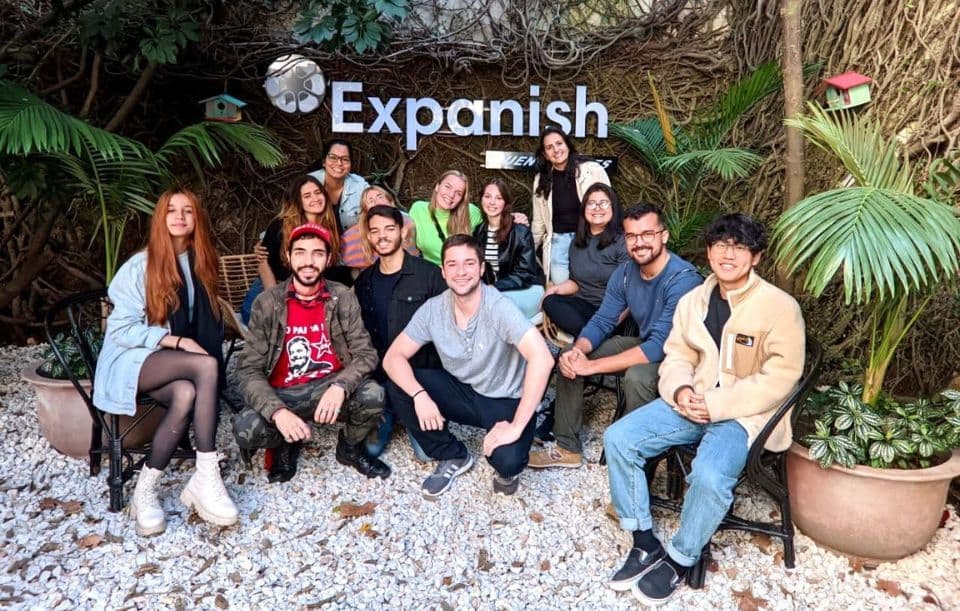

Our teamwork creates an environment for success


Teaching Methodology at Expanish
A communicative methodology focused on our students' needs
This is at the heart of our teaching approach. We want you to feel comfortable speaking Spanish at our school from the start.
With limited class sizes, with an average of 7 students per class, all students can engage with teachers and actively participate in our course lessons.
At our school you will discover all about life in your chosen city and learn how to speak like a local in everyday situations.
Academics & University Credit FAQs
Below you will find a list of frequently asked questions (FAQs) about academics and university credits. If you don't find your answer here, feel free to contact us directly and we will be happy to help.
What courses can I earn credit for?
All Expanish Study Abroad courses earn you U.S University credit.
How many credits can I earn?
Credits are dependent on the number of instructional hours you successfully complete. This is something to review with the academics department at your University
In the case of our Spanish classes (for intensive months) You can earn 1 semester credit for every 15 hours of Spanish class. For our 6 week summer programs for example, you will complete 120 hours of class, which transfers to 8 academic credits.
My university is on the quarter system. How do I know how many quarter credits I will receive if IPSL uses semester credits?
Normally, 3 semester credits are equal to 1.5 quarter credits, and are obtained with 45 academic hours at Expanish. If your home university uses the quarter system, make sure to confirm with your university beforehand what their process is and how many units you will receive.
How can I be sure that my credits will be accepted by my home university?
Since many universities have different course requirements, it is important for you to confirm with your home university that they will accept your credits. This can usually be done by showing them the course syllabus prior to enrolling in the program, though each university may have different requirements. You can find a copy of the syllabus by contacting studyabroad@expanish.com.
What if I am completing language courses online?
It does not matter whether the course is offered online or in person, official academic credit will be awarded for either modality.
What is the attendance policy?
Students must attend 80% of their classes in order to pass the course.
How are grades calculated?
Each course is different, it is best to refer to each syllabus.
In the case of our Spanish courses, the final grade consists of:
Attendance & Class participation 20%
Continuous Assessment (Quizzes) 20%
Homework 15%
Midterm exercices 15%
Final exam 30%
How do I receive a transcript?
Once students complete their program, they will receive an email from our partner university with instructions on how to order the official transcript.
How much does the transcript cost?
The transcript is $450, and is included in the program fees. When you are ordering the transcript, there will be a fee of an additional $10 (approximately, depending on the type of delivery you choose), which is charged by the university.