Global Crossroads
A Semester in Málaga
On this semester program, you’ll explore how science, culture, and history intersect in a region shaped by centuries of exchange. Málaga becomes your classroom as you study biotechnology alongside the historical and cultural influences of Spainnwithin a global framework.
Courses are delivered at the Expanish Study Center, combining scientific study with humanities-based coursework. Classroom learning is complemented by site visits, guest speakers, and experiential projects that connect biotechnology and cultural analysis to real-world contexts.
Learning extends into the city and surrounding region. Through faculty-led activities, cultural visits, and local exploration, you’ll experience Málaga as a true crossroads of ideas, gaining insight into how innovation, tradition, and cultural coexistence continue to shape life in southern Spain.
The program brings together coursework in biotechnology and cultural studies, allowing students to examine scientific innovation while understanding the historical foundations that influence contemporary Spanish society. This integrated approach encourages critical thinking across disciplines.
Global Crossroads is designed for students interested in biotechnology, health and life sciences, history, cultural studies, international relations, and global studies. Its interdisciplinary structure supports a wide range of majors while offering a distinctive academic perspective.
Through collaborative projects, applied scientific coursework, and cross-cultural learning, you’ll develop analytical skills, intercultural awareness, and a global mindset, preparing you to navigate complex professional and academic environments shaped by both innovation and history.
Studying at Our Málaga Study Center
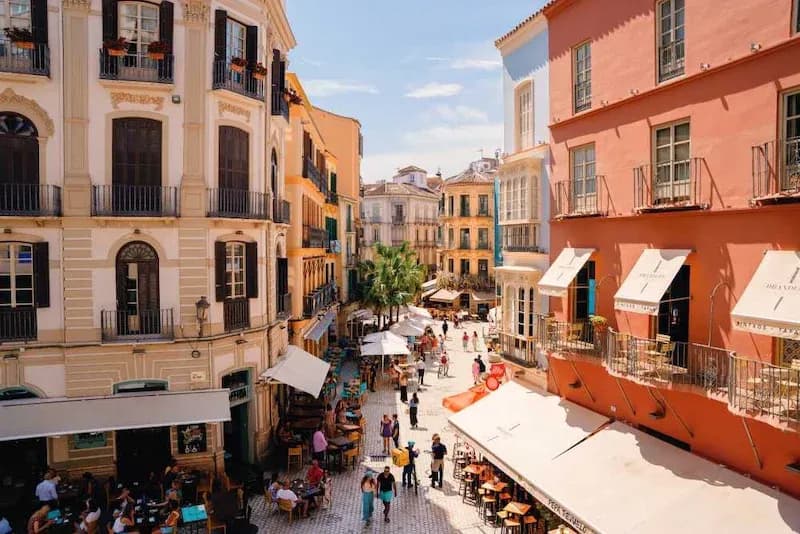
Our school in Málaga is right inside the city center, walking distance to the best beaches, cafes, and restaurants of the city
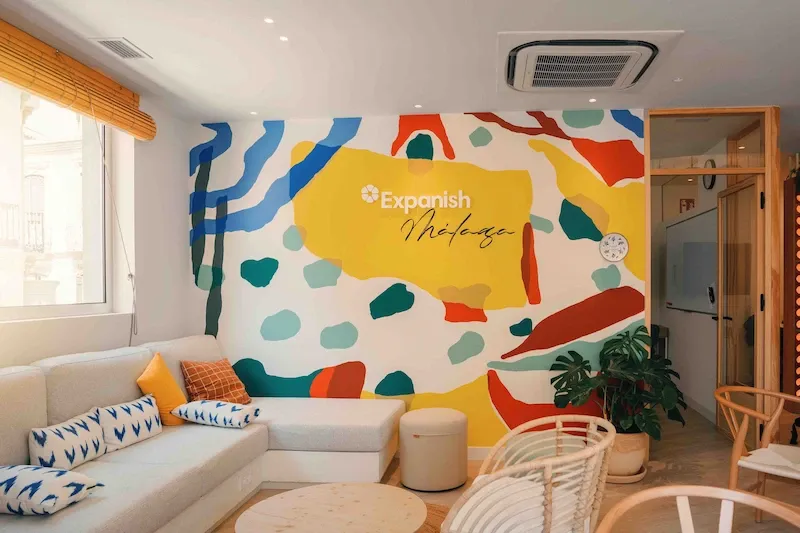

Located in the ideal spot for student housing, student activities, and the best parts of the city - our school is easy to love!
Our school hosts international students year-round. You'll have the chance to learn about new cultures each day!
We provide 3-4 weekly activities at and around our school, so that you'll have a chance to learn more about your new city and meet new friends!
Your Courses in Málaga
Scroll the top bar to see more!
The Legacy of Al Andalus and Cultural Diplomacy
This course examines the historical legacy of Al-Andalus and its enduring influence on cultural exchange, identity, and diplomacy on both ends of the Western Mediterranean. Students will explore how Al-Andalus functioned as a space of coexistence, intellectual production, and cross-cultural interaction among Muslim, Christian, and Jewish communities. The course traces the political, social, artistic, scientific, and philosophical contributions of Al-Andalus, with particular attention given to architecture, music, science, and systems of governance as vehicles of cultural dialogue and mutual influence. Building on this historical foundation, the course connects the legacy of Al-Andalus to contemporary practices of cultural diplomacy. Students will analyze how shared heritage, memory, and narratives generate diplomatic initiatives, intercultural dialogue, heritage preservation, and soft power strategies in the Euro-Mediterranean region. By the end of the course, students will be able to critically assess the historical significance of Al-Andalus, understand its symbolic and practical role in modern cultural diplomacy, and evaluate how historical legacies can contribute to conflict resolution, cooperation, and mutual understanding in a globalized world.
Biotechnology and Health Management in Spain
This course explores the role of biotechnology in shaping Spain’s healthcare system, public health policies, and biomedical innovation. The course examines how scientific advances in biotechnology intersect with health management, regulation, and ethical considerations within the Spanish and European contexts. Students will study key areas such as pharmaceutical and biotech innovation, genomics and personalized medicine, medical devices, digital health, and biotechnology in public health. Particular attention is given to Spain’s National Health System, its decentralized governance structure, and the management of healthcare services across autonomous communities. The course also analyzes regulatory and policy frameworks at both national and EU levels, including clinical trials regulation, health technology assessment, and market access for biotech products. Through case studies, policy analysis, and applied projects, students will gain insight into the challenges of managing innovation, sustainability, and equity in healthcare. Ethical issues related to biotechnology—such as data protection, bioethics, access to care, and patient rights—are integrated throughout the course.
Business and Blue Economy in the Western Mediterranean Crossroads
This course explores the economic, environmental, and strategic dimensions of the Blue Economy in the region at both ends of the Strait of Gibraltar. It examines how maritime and coastal activities (shipping and logistics, tourism, fisheries and aquaculture, renewable marine energy, port management, and marine biotechnology) contribute to regional development while facing increasing sustainability and governance challenges. Students will analyze the Western Mediterranean as a dynamic and interconnected economic space, shaped by international trade routes, coastal urbanization, climate change, and European, Spanish and Moroccan policy frameworks. The course combines business perspectives with environmental and socio-political considerations, highlighting innovation, entrepreneurship, and sustainable business models in marine and coastal sectors. Through case studies, policy analysis, and applied projects, participants will develop the ability to assess market opportunities, risks, and regulatory constraints specific to the Blue Economy. By the end of the course, students will be equipped to design and evaluate business strategies that balance economic growth with environmental protection and social responsibility in the Western Mediterranean context.
Climate Change and Coastal Engineering in the Western Mediterranean
This course explores the interactions between climate change and coastal systems in the Western Mediterranean, with a focus on the challenges and solutions relevant to coastal engineering. The course addresses key climate-driven impacts such as sea level rise, coastal erosion, flooding, extreme storm events, and ecosystem degradation, using the coasts of southern Spain and northern Morocco Spain as a case study region. Emphasis is placed on the vulnerability of urbanized coasts, ports, beaches and low-lying areas, as well as on the socio-economic implications for tourism, infrastructure, and coastal communities. Students will learn to apply coastal engineering tools and methodologies to assess risks and design adaptation and mitigation strategies. Topics include coastal monitoring and data analysis, numerical and physical modeling, nature-based solutions, hard and hybrid coastal defenses, and integrated coastal zone management under climate uncertainty. Real-world case studies from Spain and Morocco will be used to link theory with practice. By the end of the course, students will be able to critically evaluate climate change impacts on Western Mediterranean coastlines and propose sustainable, engineering-based responses that balance environmental, technical, and societal considerations.
Luxury, Hospitality and Cuisine in Spain and Morocco
This course explores the worlds of luxury, hospitality, and gastronomy in Spain and Morocco through cultural, historical, and contemporary perspectives. Focusing on two countries with deep Mediterranean connections, the course examines how heritage, craftsmanship, design, and culinary traditions shape distinctive models of high-end tourism and hospitality. Students will analyze the evolution of luxury and hospitality from royal courts, riads, and paradores to modern boutique hotels, resorts, and fine-dining experiences. The course highlights the role of architecture, interior design, service culture, branding, and storytelling in creating meaningful luxury experiences rooted in place and tradition. Special attention is given to the fusion of Andalusi, Arab, Amazigh, Mediterranean, and European influences that define hospitality practices in both countries. Culinary traditions are a central component of the course, with an emphasis on regional products, food heritage, and contemporary gastronomy. Students will explore Spanish and Moroccan cuisines, their shared histories, techniques, and ingredients, as well as the global positioning of chefs, restaurants, and culinary destinations as instruments of cultural prestige and economic development. By the end of the course, students will be able to critically assess luxury and hospitality models in Spain and Morocco, understand the cultural significance of cuisine as an expression of identity and soft power, and evaluate how tradition and innovation intersect in shaping premium experiences for global audiences.
Cybersecurity and Digital Ethics in the European Union
This course examines how the EU addresses cybersecurity challenges while upholding fundamental rights, democratic values, and ethical principles in the digital age. The course explores the legal, political, and technical foundations of cybersecurity in the EU, alongside ethical questions related to privacy, data protection, surveillance, artificial intelligence, and digital sovereignty. Students will analyze key EU policies, strategies, and regulatory frameworks—such as the EU Cybersecurity Strategy, the GDPR, the NIS2 Directive, and the Digital Services and Digital Markets Acts—and assess their impact on governments, businesses, and citizens. The course also addresses contemporary threats including cybercrime, disinformation, hybrid threats, and state-sponsored cyber operations, with a focus on risk management, resilience, and international cooperation. Through case studies, policy analysis, and ethical debates, students will develop critical skills to evaluate how cybersecurity measures can be designed and implemented responsibly, balancing security needs with human rights and ethical accountability. The course is particularly suited for students interested in EU studies, law, international relations, public policy, information security, and digital governance.
Málaga Student Housing
Hear From Our Students
Meet Our Málaga Staff

Canela Ojjioni Giachero
Center Director

Esperanza González
Academic Coordinator

Marina García
Housing & Transfers Coordinator

Sei Wints
Student Services & Activities Coordinator

Saúl Zafra
Summer Camps & Groups Activities

Alba Fernández
Instructor

Tina Ramirez
Instructor

Gabriel López
Instructor

Check Out Our Málaga Blogs
7 Good Reasons to Study in Malaga
Malaga is the sixth largest city in Spain and well known as a gateway to the tourist-filled Costa del Sol. And yet, it is sometimes overlooked as a destination in itself. Don’t make this mistake: Malaga has something to offer everyone and is a great place for students who want to have cultural immersion.
Studying Overseas: Nuances You Need to Know
Spoken by over 500 million people worldwide, Spanish accentsand language differences are as unique and varied as the people who speak it. For many people, it may be quite obvious that the Spanish spoken in Spain sounds different than the Spanish spoken in Argentina.
6 Incredible Ways Living in a Homestay Shapes Your Abroad Experience
When it comes to living abroad, there are dozens of different living options for students of all ages. We recommend that if students want to achieve the fully immersive experience and maximize their language learning, they should consider living in a homestay an absolute must. There are countless advantages of living in a homestay while living abroad, but if you’re still on the fence about it, consider the following ways that living with a host family can enhance your abroad experience.

Explore Research & Internship Semesters
Field Studies & Research

Internship & Cross-Cultural Studies